Relevance
Does your business match what the person searched for?
Google needs enough information to understand what your business actually does and when it is relevant to a search.
Category
Services
Website
Business info
CLIKVUE GROWTH HUB
You search Google Maps for the service your business provides.
Several competitors appear.
Yours doesn't.
That can be frustrating, but before changing your Google Business Profile, there is one important question to answer:
Is your business genuinely missing from Google, or is it simply not ranking for the search you tried?
Those are two different problems.
If you understand which one you have, it becomes much easier to work out what to fix.
If you can't find your business on Google Maps, first search for your exact business name and town.
Google itself recommends searching Maps using your business name and city when looking for your Business Profile.
If your profile appears when you search its exact name but doesn't appear when you search something like “plumber near me” or “accountant in Kettering”, your business probably isn't missing.
You're more likely dealing with a local visibility problem.
If the business doesn't appear even when you search its exact name, start with the technical checks below.
Quick diagnosis
You search your exact business name and town, but the profile still doesn't appear.
Check first:
Your profile appears by name, but not when people search for the services you offer.
Focus on:
Knowing which problem you have changes what you should fix next.
Verification is one of the first things to check.
Google says only verified businesses can show their business information on Google Maps and Search.
Sign in to the Google account used to manage the business and check whether Google is asking you to complete verification.
Depending on the business, Google may offer different verification methods. Video verification is one of the methods Google currently uses for storefront, hybrid and service-area businesses.
For video verification, Google may ask you to show things such as:
The requirements vary depending on how your business operates.
If verification is still outstanding, complete that before trying to diagnose a ranking problem.
Google may suspend or disable Business Profiles that don't follow its guidelines.
If a profile is removed, the public cannot access it until the issue is successfully resolved.
Check the Google account that manages your Business Profile for any warnings or restrictions.
If the profile has been suspended, don't immediately create another profile for the same business. Google specifically advises against creating a new Business Profile while an appeal is being reviewed.
Instead, check that your information accurately represents the real business and follow Google's appeal process.
Sometimes nothing is actually broken.
Google says rankings for new businesses can take up to a month to appear in search results. Changes to business information can also take time to feed through.
Individual Business Profile edits are normally reviewed much more quickly, but Google says some can remain pending for up to 30 days.
If you've just created the profile or made major changes, check its status before repeatedly editing the same information.
At this point, search for your exact business name again.
If you can find it, you've established something useful:
Your business is on Google.
The question now becomes:
Why isn't Google showing it prominently when people search for the services you provide?
Google says its local results are mainly based on three factors:
How local results work
Google uses a combination of these three factors when deciding which businesses are most useful for a local search.
Does your business match what the person searched for?
Google needs enough information to understand what your business actually does and when it is relevant to a search.
How close is your business to the person searching?
Local results can change depending on where somebody is searching from. Two people can make the same search and see different businesses.
How established does your business appear online?
Reviews, links, your website and other information about your business can help Google understand how established it is.
You can influence relevance and prominence. Distance is much harder to control.
Your Business Profile category matters.
Google says the categories you choose affect local ranking and recommends selecting a specific primary category that best describes the business.
For example, a business shouldn't choose a long list of loosely related categories simply because it wants to appear for more searches.
Google recommends using only the categories needed to describe the core business, rather than using categories like keywords.
Ask yourself:
Does my primary category accurately describe what this business mainly is?
Your other business information should support that answer too.
Make sure your services, website, description and wider online presence make it clear what you actually provide.
Distance is easy to underestimate.
Google considers how far a business is from the person conducting the search. If the searcher's precise location isn't available, Google uses other information to estimate where they are.
That means two people searching exactly the same phrase can see different local results.
So:
Searching your own business from your own phone is not a perfect test of how visible your business is across your whole area.
A business could perform well close to its location and be much less visible several miles away.
This is particularly important for trades and service businesses.
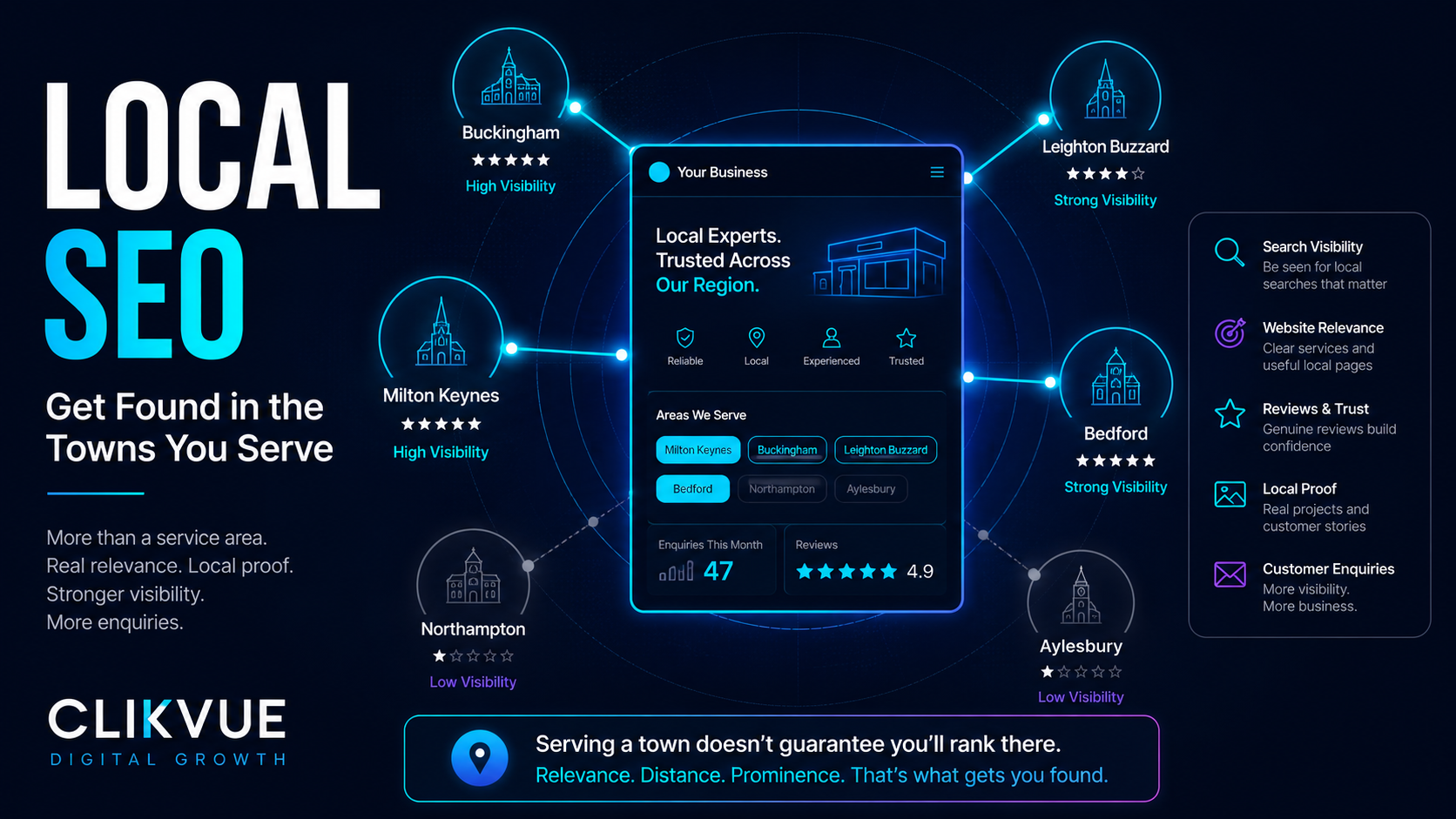
Google allows service-area businesses to specify up to 20 cities, postcodes or other areas that they genuinely serve. Google also recommends keeping the overall area reasonably close to the business base and being accurate about where you operate.
SERVICE AREA ≠ GUARANTEED RANKINGS
But don't treat the service-area setting as a ranking switch.
Google still says distance is one of the main factors used when determining local results. It would therefore be a mistake to assume that adding a town to your service area guarantees you'll begin appearing prominently there.
We'll cover this in more detail in our separate guide to getting found in the towns your business serves.
Sometimes the issue is much less complicated than SEO.
Google says businesses with complete and accurate information are more likely to appear in relevant local results.
Check:
Your Business Profile should accurately represent the business people interact with in the real world.
Avoid adding unnecessary keywords, locations or services to your business name simply because you want to rank for them.
Google's guidelines say businesses should use their real-world business name and select categories that genuinely represent the core business.
Two businesses can both have complete Google Business Profiles but still perform very differently.
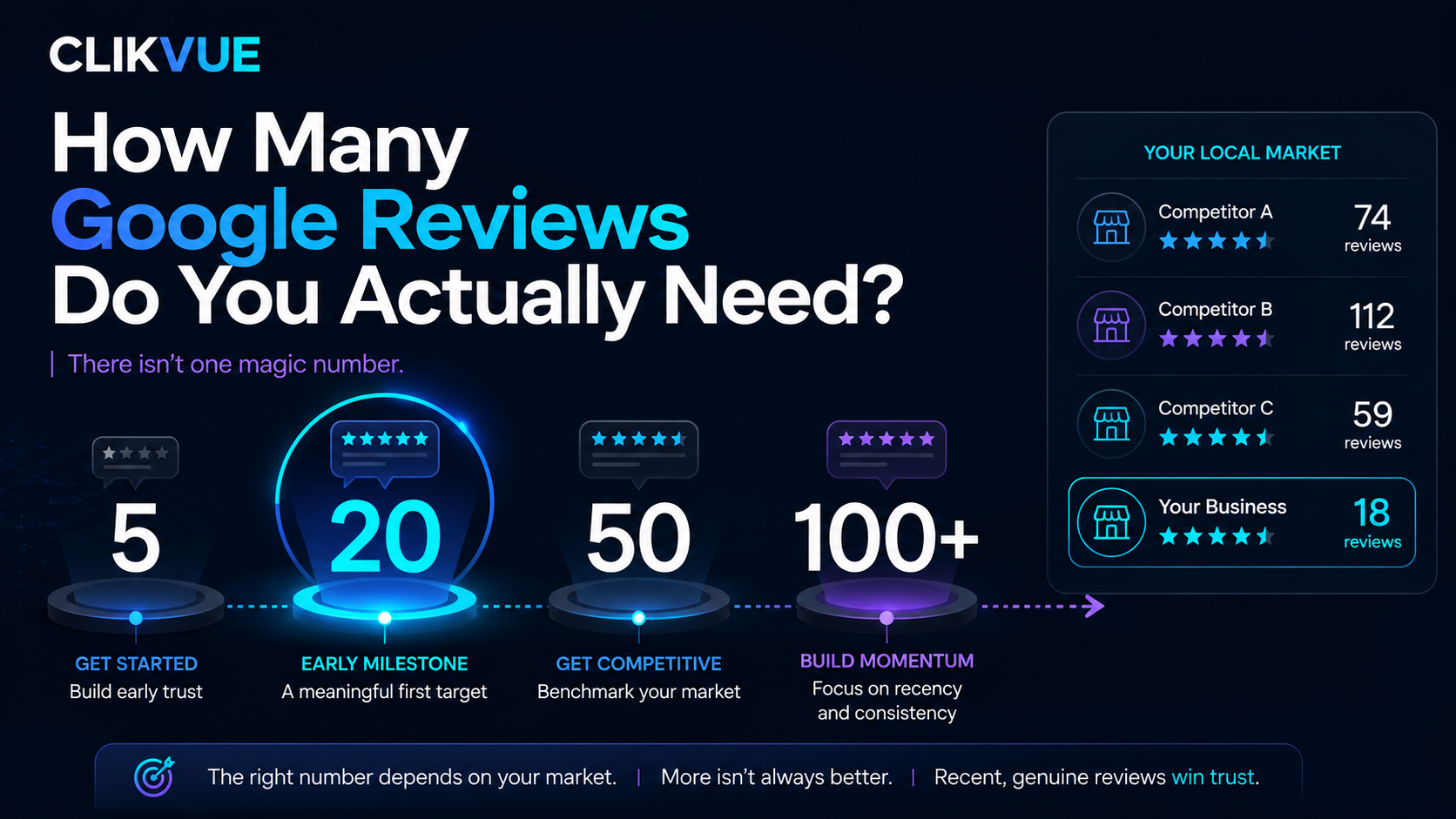
Google says prominence can be influenced by information about a business from across the web, including links and reviews. It also says more reviews and positive ratings can help local ranking.
That means your Google Maps visibility doesn't exist in isolation.
Your wider online presence matters too.
A competitor might have:
This doesn't mean you need to chase every possible marketing tactic.
It means Google Maps visibility should be looked at as part of your overall online visibility, rather than as one disconnected profile.
Before creating a new listing, search Google Maps carefully for your business.
You may discover an older or unverified profile already exists.
Google allows legitimate businesses to claim an existing unverified profile rather than creating another one. It also provides processes for resolving duplicate profiles and ownership issues.
If your business has moved location, Google specifically recommends updating the existing profile rather than creating a completely new one.
Google Maps visibility checklist
Work through these in order. The goal is to identify the actual problem before you start changing things that may already be working.
Can you find the profile at all?
Complete any outstanding verification.
Look for suspension or profile warnings.
Recent edits may still be processing.
An older version of the business may already exist.
Check your name, phone number, website and opening hours.
Does it accurately describe your main business?
Check your address or service-area configuration.
One search from your own phone doesn't tell the whole story.
Look at their reviews, websites and wider online presence.
Diagnose first. Optimise second. Fix the problem you actually have rather than changing everything at once.
When competitors keep appearing above you, shortcuts can become tempting.
Avoid:
Google requires Business Profiles to accurately represent eligible real-world businesses, and profiles that break its guidelines can be suspended or disabled.
A legitimate improvement to your visibility is far more valuable than a shortcut that risks removing the profile entirely.
If your business is completely missing from Google Maps, start with the technical basics:
Verification, profile status, duplicates and accurate information.
If you appear when somebody searches your business name but disappear for your important services, start thinking about:
Relevance, distance and prominence.
You can't control every part of Google's local search system.
But you can make it much easier for both Google and potential customers to understand:
Who you are.
What you do.
Where you operate.
And why somebody should choose you.
That is the foundation of stronger local visibility.
A Google Business Profile is only one part of your online presence.
The Clikvue Online Visibility Snapshot Report gives you a focused assessment of how your business currently appears online, including areas such as your website, Google visibility, trust, reviews and conversion.
For £100, we'll identify what looks healthy, where potential problems may be limiting you, and the areas that deserve attention next.
No promises of instant rankings. No unnecessary marketing jargon.
Just a clearer picture of where your business stands and what could be improved.
Not ready for a full report? You can also complete the free Clikvue Growth Score for a quick indication of how your visibility, credibility, conversion and reputation are performing.
Find your business on Google
Google's official guidance for locating and managing your Business Profile.
Verify your business on Google
Official guidance on Business Profile verification and available verification methods.
Manage your business category
Google's guide to choosing and updating your primary and additional categories.
Manage service areas
Official guidance for service-area and hybrid businesses.
Fix a suspended or disabled Business Profile
Google's official appeal and reinstatement guidance.
Google Business Profile Help: Tips to improve your local ranking on Google
Used for Google's guidance on relevance, distance, prominence, reviews and complete business information.
Google Business Profile Help: Guidelines for representing your business on Google
Used for business-name, category and profile accuracy guidance.
Google Business Profile Help: Understand what happens to your Business Profile edits
Used for information about pending profile changes and review times.
Google Business Profile Help: Resolve duplicate profiles and ownership issues
Used for duplicate, ownership and relocation guidance.
Helping small and medium businesses get found online and turn more clicks into customers.
© 2026 Clikvue Ltd. • Helping SMEs build visibility, trust and reputation online • All Rights Reserved