CLIKVUE GROWTH HUB
How Many Google Reviews Does a Small Business Need?
How Many Google Reviews Does a Small Business Need?
If your business has 12 Google reviews, is that good?
What about 30? 50? 100?
It is tempting to look for one number that means you have finally got “enough” Google reviews. Unfortunately, Google does not give businesses a target to hit, and the right number can be completely different from one market to another.
A local electrician with 38 reviews might look very well established if most nearby competitors have fewer than 20. A dentist with the same 38 reviews might look relatively unproven if other practices nearby have hundreds.
So the useful question is not simply:
“How many Google reviews do I need?”
It is:
“Do I have enough recent, genuine reviews to compete with the businesses my customers are comparing me with?”
For many small businesses, 20 reviews is a useful first milestone. But it should rarely be the finish line.
Let’s look at how to work out a sensible target for your business.
Is There a Minimum Number of Google Reviews You Need?
Technically, no.
Google does not publish a minimum review count that a business needs before it can rank well in local results.
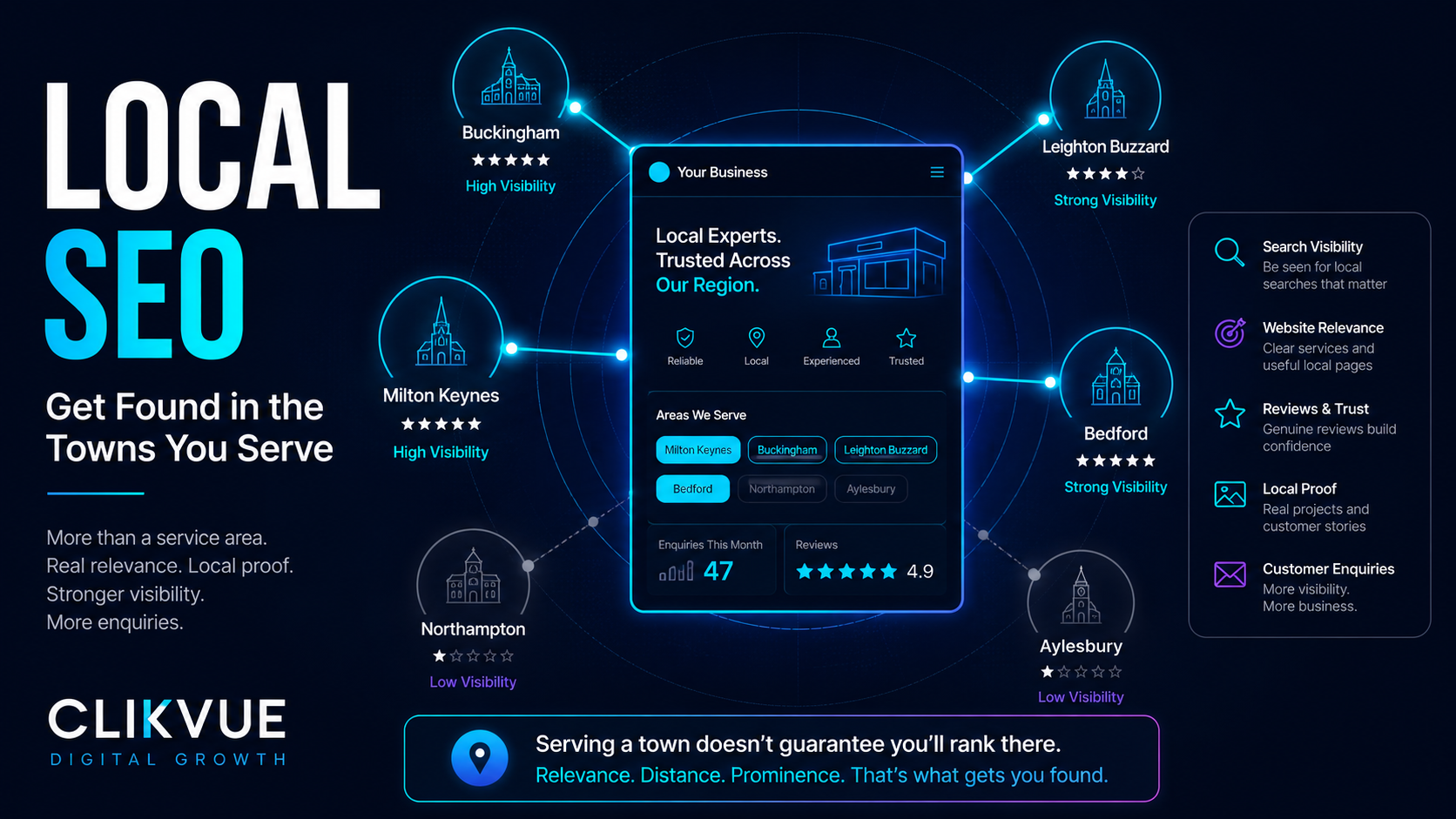
Google explains that local search results are mainly determined by three broad factors:
- Relevance — how well the business matches what someone is searching for
- Distance — how close it is to the searcher or specified location
- Prominence — how well known and established the business appears
Reviews form part of that last factor. Google specifically states that having more reviews and positive ratings can help a business's local ranking.
That does not mean the business with the most reviews automatically ranks first.
Your Google Business Profile, website, location, categories, local relevance, links and other signals all contribute.
Reviews are simply one important part of the picture.
So why does review count matter?
Because potential customers can see it too.
Imagine searching for a plumber and finding these three businesses:
Business A
4.9 stars · 7 reviews
Business B
4.8 stars · 86 reviews
Business C
4.7 stars · 214 reviews
Even though Business A technically has the highest rating, many people are likely to feel more confident choosing a business that has demonstrated a good experience across dozens or hundreds of customers.
The rating matters.
But so does the evidence behind it.
Is 20 Google Reviews Enough for a Small Business?
20 reviews is a useful first milestone.
It gives customers more evidence to judge your business by, but your real long-term target should be based on the competitors appearing alongside you on Google.
Get to 20 → compare your market → set your next target.
For a newer business, 20 genuine Google reviews is a very worthwhile first target.
There is some consumer research behind that number too.
BrightLocal's 2026 Local Consumer Review Survey found that 47% of respondents said they would not use a business with fewer than 20 reviews. Only 9% were willing to use a business with five reviews or fewer.
There is an important caveat here: the BrightLocal study surveyed 1,002 US adults rather than UK consumers, so it should not be treated as a precise rule for every British small business.
It is still a useful indication of how customers tend to assess review volume.
A handful of five-star reviews can look promising.
Twenty or more starts to show a pattern.
But once you reach 20, the question changes from:
“Do we have any social proof?”
to:
“How does our reputation compare with the alternatives?”
That is where competitor benchmarking becomes much more useful.
Your Competitors Matter More Than an Arbitrary Target
Suppose you run a roofing company in Northampton.
Search Google for phrases a genuine customer might use, such as:
- roofer Northampton
- roof repair Northampton
- roofing company near me
Then look at the businesses appearing prominently.
You might find:
Your 4.9 rating is excellent.
But from a potential customer's point of view, the other businesses have considerably more evidence supporting their ratings.
That is your review gap.
In this example, aiming immediately for 200 reviews is probably unnecessary.
A much more useful first goal might be:
Get from 18 reviews to 50, while continuing to collect new reviews every month.
Once you reach that point, reassess the market.
This turns review generation into an achievable business process rather than an endless chase for a bigger number.
A Practical Google Review Target for Small Businesses
What should your next review target be?
Think of review numbers as milestones rather than fixed rules. What matters most changes as your profile grows.
Build the foundations
Start getting genuine customer feedback coming in. At this stage, every new review makes a noticeable difference.
Reach your first milestone
Work towards 20 genuine reviews and give potential customers a stronger base of evidence to judge your business.
Compare your local market
Look at the review count, ratings and recency of businesses customers are seeing alongside you on Google.
Keep reviews coming
Focus increasingly on fresh, consistent feedback instead of chasing an arbitrary total.
These are practical milestones, not Google ranking thresholds. Your real target should reflect your competitors, local market and the number of genuine customers your business serves.
There is no universal formula, but this gives most small businesses a useful starting point.
0–5 reviews: Build the foundations
At this stage, every genuine review makes a noticeable difference.
Your goal should simply be to start asking satisfied customers consistently rather than worrying about competitors with hundreds of reviews.
Make sure your Google Business Profile is properly set up and make leaving a review easy.
Google allows businesses to create a direct review link or QR code that can be shared with customers.
5–20 reviews: Build credibility
You now have some evidence that real customers use and trust the business, but the sample is still fairly small.
Make 20 genuine reviews your next milestone.
Do not rush them.
Ten natural reviews collected over several months are far more useful than trying to manufacture a sudden burst of reviews that do not represent genuine customer experiences.
20–50 reviews: Start benchmarking competitors
Once you pass roughly 20 reviews, stop thinking only about your own number.
Search for the services you want to be found for and compare your profile against businesses appearing around you.
Look at:
- total review count
- average rating
- how recently reviews are being posted
- whether competitors respond
- what customers repeatedly mention
You may discover that 35 reviews would already make you competitive.
Or you might discover that businesses in your market commonly have 150+.
The target should reflect the market you are actually competing in.
50+ reviews: Focus increasingly on consistency
Once a business has built a healthy volume of reviews, collecting the next 50 as quickly as possible is not necessarily the priority.
Keeping the profile active becomes important.
A company with 120 reviews but nothing new for nine months can look less active than one with 80 reviews that receives several genuine reviews every month.
Review count matters.
Review momentum matters too.
Fresh Reviews Can Matter More Than Chasing a Huge Total
This is one of the most easily overlooked parts of review management.
Customers do not only look at how many reviews you have.
They often look at when those reviews were written.
BrightLocal's 2026 study found that 74% of respondents paid attention to reviews written within the previous three months, while 44% considered a review being posted within the last month an important factor when assessing a business.
Again, this is US consumer research rather than UK-specific data, but the principle is useful.
Consider these two businesses:
Business A
4.8 stars · 162 reviews
Latest review: 8 months ago
Business B
4.8 stars · 94 reviews
Latest reviews: 3 days ago, 2 weeks ago and last month
Business A has significantly more reviews.
But Business B gives the customer something else: evidence that people are still using the company and having good experiences now.
That is why collecting reviews should be an ongoing habit rather than a one-off campaign.
How Many New Reviews Should You Aim for Each Month?
There is no fixed monthly target either.
For many small local businesses, two to four genuine new reviews each month would create healthy momentum.
But the right pace depends on how many customers you actually serve.
A consultant completing six client projects per month should not expect 30 new reviews every month.
A busy salon serving hundreds of customers may reasonably collect far more.
Your review activity should look believable because it should reflect genuine business activity.
A useful rule is:
Aim for consistent review growth that makes sense for the number of customers you serve.
If you currently receive no reviews at all, getting two each month is meaningful progress.
That would add 24 fresh reviews over a year.
Small numbers compound surprisingly quickly when the process is consistent.
Rating or Review Count: Which Matters More?
Neither works particularly well in isolation.
Consider:
5.0 stars from 6 reviews
versus:
4.8 stars from 126 reviews
The first business has a perfect score.
The second has much stronger evidence that it consistently delivers a good experience.
That does not mean you should worry if an occasional four-star review appears.
In fact, Google's own guidance encourages businesses to value honest and balanced feedback rather than trying to manufacture a perfect profile.
Google calculates your displayed score from the average of the ratings published for the business.
For most customers, what matters is the overall picture:
- Is the rating strong?
- Are there enough reviews to trust it?
- Are the reviews recent?
- Do they sound genuine?
- Are customers consistently mentioning positive experiences?
- Does the business respond professionally?
That combination is much stronger than obsessing over maintaining a perfect 5.0.
The Content of Your Reviews Matters Too
Twenty reviews that simply say:
“Great service.”
are useful.
But twenty reviews describing the work you actually provide can be far more persuasive.
Imagine a potential customer looking for an emergency plumber.
A review saying:
“Called about a leaking pipe late in the evening. They arrived quickly, explained what had happened and repaired it the same night.”
answers several questions without the business having to say anything itself.
The customer can see evidence of:
- emergency availability
- responsiveness
- plumbing expertise
- communication
- reliability
This is one reason good reviews are much more than a number next to your Google listing.
They help prospective customers understand what it is actually like to work with you.
BrightLocal's research also found that consumers place particular importance on seeing consistent themes across multiple reviews, rather than relying on one unusually positive piece of feedback.
That consistency builds trust.
Should You Respond to Every Google Review?
Where practical, yes.
You do not need to write an essay underneath every five-star rating.
But thoughtful responses show that someone is actively looking after the business profile.
Google itself recommends responding to reviews because it shows customers that their feedback matters.
Try to avoid copying exactly the same reply underneath every review.
Instead of:
“Thanks for your review. We appreciate your business.”
every single time, reference something from the customer's experience where possible.
For example:
“Thanks, Sarah. Really pleased we could get the boiler issue sorted quickly for you. We appreciate you taking the time to leave us a review.”
Simple.
Human.
And clearly written for the person who actually left the review.
How to Get More Google Reviews Without Being Pushy
The easiest review strategy is usually the least complicated one.
Ask customers after a successful interaction.
That might be:
- after completing a job
- after a customer collects their order
- after an appointment
- after resolving a support issue
- when a customer sends positive feedback
- in a short follow-up email or message
Google specifically allows businesses to ask customers to share genuine experiences and provides direct review links and QR codes to make the process easier.
Something as simple as this can work:
“Thanks again for choosing us. If you have a minute, we'd really appreciate an honest Google review about your experience. Here's the link: [review link]”
You do not need a complicated campaign.
You need a repeatable moment in the customer journey where asking for feedback feels natural.
Don't Buy, Manufacture or Incentivise Google Reviews
This is where businesses need to be careful.
Google requires reviews to reflect genuine experiences.
Its policies prohibit offering incentives such as discounts, free products or services in exchange for posting a review, changing an existing review or removing a negative one. Google also prohibits selectively soliciting positive reviews while discouraging negative feedback.
Trying to artificially inflate your profile can have consequences too. Google says businesses that violate its fake engagement policies may have reviews removed, temporarily lose the ability to receive reviews or have a warning displayed on their Business Profile.
For UK businesses there is another reason to take this seriously.
Changes introduced under the Digital Markets, Competition and Consumers Act 2024 came into force on 6 April 2025, introducing specific banned practices around fake and misleading consumer reviews. The Competition and Markets Authority has since increased enforcement activity in this area.
Building reviews more slowly from genuine customers is worth it.
You are building an asset your business can actually trust.
How to Work Out Your Own Google Review Target
Find your review gap
Your review target makes more sense when you compare it with the businesses customers are already seeing alongside you.
Close the gap in stages
You do not need to jump straight from 18 reviews to 112. Set a realistic next target, build consistently, then compare the market again.
The goal isn't necessarily to have the most reviews. It's to make sure your profile carries enough current, credible evidence to compete confidently with the alternatives customers can see.
You can do a simple review check yourself in around 15 minutes.
Step 1: Choose three important searches
Think like a customer.
For example, a dentist in Leicester might search:
- dentist Leicester
- private dentist Leicester
- emergency dentist Leicester
Step 2: Record the businesses appearing prominently
Ignore huge national brands if they are not genuinely comparable.
Focus on local businesses competing for the same type of customer.
Step 3: Write down their review numbers
For each competitor, note:
- total reviews
- star rating
- date of latest review
Step 4: Compare your profile
If you have 17 reviews and most visible competitors have between 60 and 90, you have identified a meaningful review gap.
If you have 84 and your competitors have 25–50, review quantity probably is not the main weakness you need to solve.
Step 5: Set the next milestone, not the final number
If you have 17 reviews, do not immediately set yourself a target of 100.
Try:
17 → 25
Then:
25 → 40
Then reassess.
Smaller milestones are easier to turn into a repeatable process.
More Reviews Won't Fix Everything
Reviews are only one part of the decision.
Google visibility gets you seen.
Reviews help build confidence.
Your website answers the remaining questions.
A clear next step turns interest into an enquiry.
Strong reviews cannot rescue a confusing customer journey.
This part matters.
If your business is struggling to appear on Google, reviews may be one reason.
But they are not automatically the reason.
Google says local ranking primarily considers relevance, distance and prominence. Reviews contribute to that picture, but they sit alongside the completeness of your Business Profile, your website, business information and signals from elsewhere around the web.
Likewise, strong Google reviews can get somebody interested without guaranteeing they become a customer.
They may click through to your website next.
BrightLocal's 2026 research found that 54% of respondents visited a business's website after reading positive reviews.
If they then find:
- an unclear homepage
- no obvious services
- weak trust signals
- confusing contact information
- a poor mobile experience
- no clear next step
you can still lose the enquiry.
Google reviews work best as part of a stronger online presence, not as an isolated marketing trick.
If you want to look at the wider trust picture too, read our guide to 11 Trust Signals Every Small Business Website Should Have.
So, How Many Google Reviews Should You Aim For?
If you want a simple answer:
Start by getting to 20 genuine Google reviews.
Then stop chasing a generic number and look at your market.
Compare yourself with the businesses customers are actually seeing.
From there, focus on building:
- a competitive review count
- a strong overall rating
- recent customer feedback
- genuine comments about your services
- professional responses
- steady review growth over time
A business with 60 strong, recent and relevant reviews may have a healthier reputation than a competitor with 200 ageing reviews.
The goal is not to win a review-count competition.
It is to give potential customers enough current, credible evidence to feel comfortable choosing you.
And that number will keep changing as your business and your market grow.
Not Sure How Strong Your Online Visibility Actually Is?
Reviews are only one part of how customers find and judge your business online.
Your website, Google visibility, trust signals, business information and enquiry journey can all affect whether somebody chooses you or moves on.
You can start with Clikvue's free Growth Score assessment to get a broader picture of where your online presence may be helping or holding you back.
If you'd like a more detailed look at your website, Google visibility, reviews and overall online presence, you can also request a Clikvue Snapshot Report.
Turn Clicks into Customers.
Resources
Google Business Profile — Get More Reviews
Learn how to create a direct Google review link or QR code, ask customers for genuine feedback and respond to reviews.
Google Business Profile review guidance
Google Business Profile — Improve Your Local Ranking
Understand how Google describes relevance, distance and prominence, including the role reviews can play in local visibility.
Google Business Profile — Understand Review Scores
See how Google calculates and displays the review score shown on a Business Profile.
Google Maps — Review and Content Policies
Check Google's rules around genuine reviews, fake engagement, incentives and attempts to manipulate ratings.
BrightLocal — Local Consumer Review Survey 2026
Explore recent research into how consumers use review quantity, recency, ratings and review content when choosing local businesses.
Read the Local Consumer Review Survey
Competition and Markets Authority — Reviews Guidance
UK guidance for businesses on collecting and displaying reviews fairly and avoiding misleading review practices.
Clikvue Growth Score
Check your website clarity, Google visibility, trust, reviews and conversion journey to identify areas that may be holding your business back.
Take the free Clikvue Growth Score assessment
Sources
Google Business Profile — Tips to Improve Your Local Ranking on Google
Google Business Profile — Tips to Get More Reviews
Google Business Profile — Understand Review Scores for Local Places & Businesses
Google Maps User Generated Content Policy — Prohibited & Restricted Content
Google Business Profile — Business Profile Restrictions for Policy Violations
BrightLocal — Local Consumer Review Survey 2026
Competition and Markets Authority — What Businesses Need to Know About Unfair Commercial Practices
Competition and Markets Authority — Reviews: Guidance for Businesses and Agencies
Recent Posts